Research Article | | Peer-Reviewed

Treatment and Reuse of Domestic Wastewater: The Case of Water from the Camp SIC of Cité Verte Wastewater Treatment Plant (Yaounde-Cameroon)

Received: 18 March 2025     Accepted: 19 April 2025     Published: 9 May 2025
Views:       Downloads:
Abstract

The crisis of access to water is becoming increasingly worrying, requiring the exploration of sustainable solutions. In this context, recycling and reuse of treated wastewater are emerging as promising alternatives. The aim of this study is to implement a tertiary treatment system at the Camp SIC Cité-Verte wastewater treatment plant in Yaoundé, Cameroon, to improve the quality of the treated wastewater so that it can be safely reused to flush toilets. The methodological approach adopted includes sampling treated wastewater followed by laboratory analysis, then the design and implementation of a tertiary treatment system. A survey is then carried out among a sample of the local population to gather their opinions on the project. Analyses of the treated wastewater revealed the presence of certain contaminants requiring additional treatment. Tests on a pilot prototype validated the system's effectiveness, with a turbidity reduction rate of 80.95% after coagulation-decantation and 90.48% after sand filtration, followed by an 88.88% reduction in suspended solids. In addition, total elimination of bacterial loads was achieved with a free chlorine level of 0.73 mg/L to prevent occasional contamination. This study highlights the project's significant potential to contribute to sustainable water management.

Published in International Journal of Sustainable Development Research (Volume 11, Issue 2)
DOI 10.11648/j.ijsdr.20251102.15
Page(s) 105-114
Creative Commons

This is an Open Access article, distributed under the terms of the Creative Commons Attribution 4.0 International License (http://creativecommons.org/licenses/by/4.0/), which permits unrestricted use, distribution and reproduction in any medium or format, provided the original work is properly cited.

Copyright

Copyright © The Author(s), 2025. Published by Science Publishing Group

Keywords

Wastewater Recycling, Reuse, Cité-Verte Wastewater Treatment Plant, Yaounde

1. Introduction
Access to quality and quantity of water is a global challenge that continues to grow, particularly in African countries where pressure on water resources is increasing due to population growth, urbanisation and climate change . This challenge is a reality in Cameroon , although the country has several water resources. Population growth coupled with modern lifestyles is increasing demand for water for everyday activities. Although 78% of households in the country have access to managed water sources for their needs, 22% still use uncontrolled sources . However, not all water discharged by households after use undergoes prior treatment before entering the natural environment.
In Yaounde, Cameroon's political capital, the inadequacy of sanitation systems is a reality. Most neighbourhoods do not have efficient sewerage systems. The network is dominated by automatic sanitation systems such as septic tanks, traditional pit latrines and ventilated pit latrines, which are sources of diffuse pollution that are difficult to control . Despite efforts to build or rehabilitate collective systems in certain parts of the city, their effectiveness remains limited, allowing only partial treatment and therefore potentially leading to water contamination . This state of affairs, with partially treated water being discharged into the environment, has worrying ecological and health consequences . Waste water, whether poorly treated or not, contains numerous organic and biological pollutants, and even micropollutants made up of toxic elements that are sometimes difficult to eliminate, such as heavy metals. Their release into nature can therefore have a negative impact on the environment and potentially on humans . Inefficient sewage treatment also leads to an unacceptable waste of a precious resource, as this water cannot be reused even for non-drinking purposes, exacerbating the pressure on freshwater resources essential to human activities, hence the importance of treating domestic wastewater.
Treating domestic wastewater has become a necessity for a society that wants to be modern and concerned about preserving water resources. While the many ways of treating this water for reuse in agriculture are well known , it is also possible to think of other non-drinking uses , in particular urban use for washing vehicles, watering public gardens, flushing toilets, etc. Faced with this challenge, it is vital to explore practical and less costly solutions for improving wastewater treatment with a view to reuse.
The objective of this study is to implement a tertiary treatment system at the Camp SIC Cité-Verte water treatment plant in Yaounde. The aim of this project is not only to improve the quality of treated wastewater so that it can be reused for non-drinking purposes, i.e. toilet flushing, but also to reduce the environmental and health impacts of inadequately treated wastewater.
2. Materials and Methods
2.1. Presentation of the Cité-Verte SIC Camp Wastewater Treatment Plant
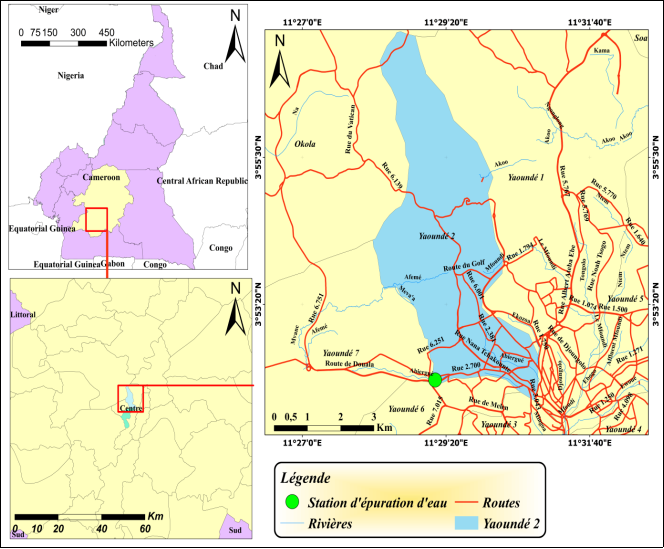
The wastewater treatment plant (WWTP) at Camp SIC Cité-Verte in Yaoundé is located in the Centre region, Mfoundi department. It straddles the commune of the Yaoundé II sub-division and the commune of the Yaoundé VI sub-division (Figure 1). This treatment plant was built in 1975 to treat wastewater from the said Housing Camp. This camp is a real estate complex comprising 997 housing units, also including commercial premises. Covering an area of 50 hectares, it has a population of around 9,000. The WWTP was first commissioned in 1982, and was subsequently upgraded in 2011 to a capacity of 5,000 p.e. with a treatment rate of 805 m3/d. The current treatment process is a ‘sand filter planted with Echinochloas pyramidalis and vertical flow’ operating autonomously.
2.2. Collecting Samples
The water samples were taken directly from the treatment plant outlet, at the point identified as representative of the final quality of the treated effluent, in accordance with the recommendations of the standard protocol , using disinfected 1.5 L and 500 mL bottles that had been rinsed 3 times with the effluent to avoid any contamination. The samples are then stored in a refrigerated chamber to maintain their integrity until they are analysed, in accordance with the general guide for the storage and handling of samples .
The purified water is then quantified using volumetric gauging. This technique is chosen because it is simple to implement and ideal for low-flow streams (50 to 100 l/s). It involves measuring the time taken to fill a container of known volume (V) placed in a flow. The flow rate (Q) is calculated by dividing the volume of the container by the average time measured.
𝑄=𝑉⁄𝑡(1)
Q = flow rate (l.s-1); V = bucket volume (l); t = filling time (s).
2.3. Physicochemical and Microbiological Analyses
The parameters monitored during this study include: pH, Turbidity, Electrical conductivity, BOD5, COD, TSS, Total Kjeldahl nitrogen (TKN), Total phosphorus (TP) and Total iron (Fe) for the physicochemical study; faecal coliforms (FC) and Escherichia coli for the microbiological study. Samples were analysed using international standard methods .
Figure 1. Map showing the location of the Camp SIC Cité-Verte station.
2.4. Design of the Tertiary Treatment Pilot Prototype
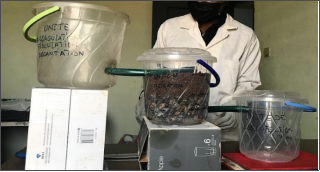
To improve the quality of the treated wastewater, a pilot prototype of the tertiary treatment unit is being designed and tested. The system is based on three main stages.
i) Coagulation/Flocculation-Decantation: Laboratory tests were used to determine the optimum doses of aluminum sulphate required to coagulate the wastewater sample used. The aim of this stage is to destabilise the colloidal particles present in the water to form flocs, which are then separated by decantation.
ii) Filtration: The settled water is then filtered through a sand filter made up of successive layers: coarse gravel (15-25 mm), medium gravel (5-15mm) and fine sand (0,3-0,8 mm). This stage eliminates residual flocs and further reduces turbidity.
iii) Disinfection: A single dose of chlorine (250 mg/L) is added to the filtered water, with a contact time of one hour. This stage guarantees the elimination of microbial pathogens.
Figure 2 shows the prototype of the proposed treatment system.
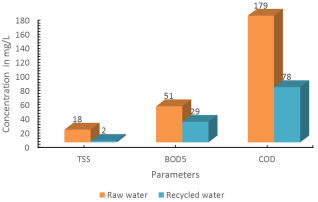
Figure 2. Pilot prototype of the proposed treatment system.
2.5. Assessment of Purification Performance
The prototype's performance is assessed by comparing the results obtained with international standards for the intended reuse and then calculating the abatement rate. The abatement rate is calculated for each parameter measured using the following formula:
E=Do- DrDo .(2)
With E: efficiency (%); Do: WWTP output data; Dr: recycled water data
2.6. Economic Analysis
An economic analysis is conducted to estimate the installation and operational costs of the proposed system. The unit costs of equipment (dosing pumps, filters), materials (aluminium sulphate, chlorine) and labor are presented in a graph. The potential revenue is estimated based on a sale price of recycled water at 0.27 €/m3, a rate applied in similar projects.
The Return on Investment (ROI) is then calculated to assess the economic viability of the project using the following formula:
ROI =Revenu- Coût d'investissementcoût d'investissement(3)
3. Results
3.1. Quantification of Treated Water Flows per Day
The water flows measured in the morning and evening, as well as the average daily flow for each day, are shown in Table 1. The results show a flow rate ranging from 0.67 L/s to 1.27 L/s, with a daily average of between 0.74 L/s and 1.25 L/s. These measurements were carried out over a three-week period, during weekends, to provide reliable and representative data essential to the dimensioning and costing of the project.
Table 1. Average daily flows.

Week

Day

Morning flow rate (L/s)

Evening flow rate (L/s)

Average daily flow rate (L/s)

1st

1

0,83

0,67

0,75

2

1,11

1,05

1,08

3

0,80

0,68

0,74

2nd

4

0,90

0,80

0,85

5

1,15

1,02

1,09

6

1,27

1,23

1,25

3rd

7

1,02

0,99

1,01

8

0,90

0,82

0,86

9

0,99

0,95

0,97

3.2. Qualitative Characterization of Treated Wastewater
The results of the physicochemical and bacteriological characterization carried out on the samples taken at the outlet of the WWTP are presented in Table 2.
Table 2. Physicochemical and bacteriological parameters of water from secondary treatment.

Parameters

Results at WWTP outlet

MINEPDED discharge standards

Canadian standard

USEPA standard

Turbidity (NTU)

42

/

≤5

≤2

pH

6,7

6 - 9

6-9

Conductivity (µS/cm)

849

TSS (mg/L)

18

≤ 50

BOD5 (mg/L)

51

≤50

≤20

≤10

COD (mg/L)

179

≤200

Nitrogen (mg/L)

8,6

≤30

Phosphorus (mg/L)

0,46

≤10

Iron (mg/L)

3,48

5

Faecal coliforms (CFU/100 mL)

38100

≤2000

≤200

Not detected

Escherichia coli (CFU/100 mL)

8700

Absence

The average turbidity measured at 42 NTU exceeds Canadian and USEPA standards, indicating poor water quality for immediate reuse. The pH value complies with MINEPDED and Canadian standards, with an average value of 6.7, which is acceptable within established limits. The water analysed had an average quantity of ions in solution, with an electrical conductivity measurement of 849 µS/cm. Suspended solids (SS) have an average value of 18 mg/L, in compliance with MINEPDED limits. However, the BOD5 measured was 51 mg/L, slightly above the MINEPDED normative limit and well above Canadian and USEPA standards. The COD measured gives an average value of 179 mg/L and complies with the MINEPDED recommendation, but could be improved to reduce the organic load. Nitrogen and phosphorus concentrations averaged 8.6 mg/L and 0.46 mg/L respectively. These waters have an iron concentration of 3.46 mg/L, in compliance with MINEPDED requirements. In bacteriological terms, the faecal coliform count was 38,100 CFU/100 ml, well in excess of MINEPDED, USEPA and Canadian standards, representing a major health risk. Escherichia coli levels of 8700 CFU/100 ml also exceed MINEPDED standards.
3.3. Performance Evaluation of the Pilot Prototype of the Tertiary Treatment System
To assess the performance of the proposed treatment system, a pilot prototype was designed and tested using purified water. Table 3 shows the results of recycled water analysis, highlighting the main quality parameters in relation to USEPA and Canadian reuse standards, as MINEPDED has not defined standards for wastewater reuse.
Table 3. Recycled water analysis results.

Parameters

Value obtained

USEPA standard

Canadian standard

Reduction rate

pH

5,47

6-9

6-9

Turbidity after coagulation-settling (NTU)

8

80,95

Turbidity after filtration (NTU)

4

≤2

≤5

90,48

TSS (mg/L)

2

88,88

BOD5 (mg/L)

29

43,13

COD (mg/L)

78

56,42

Residual chlorine (mg/L)

0,73

1

≥ 0,5

Faecal coliforms (CFU/100 mL)

0

Not detected

≤200

100

Escherichia coli (CFU/100 mL)

0

≤200

100

Tertiary treatment brings the pH down to 5.47, which is lower than that recommended by USEPA and Canadian standards. Turbidity after coagulation, decantation and filtration is reduced to 4 NTU, thus complying with the Canadian standard (≤5NTU). This treatment also has an effect on TSS, BOD5 and COD values, reducing their concentrations to 2 mg/L, 29 mg/L and 78 mg/L respectively. Microbial germs are completely eliminated by this tertiary treatment.
To illustrate the impact of this tertiary treatment, Figures 3, 4 and 5 compares the concentrations before and after treatment for the analyzed quality parameters, highlighting the overall efficiency of the process. Figure 3 illustrates the concentration of organic pollutants parameters (BOD5 and COD) as well as TSS before and after treatment.
Figure 3. Concentrations of organic pollutants parameters and TSS before and after treatment.
The graph shows a significant reduction in all parameters after treatment, highlighting the efficiency of the process. For TSS, the concentration decreased from 18 mg/L in raw water to 2 mg/L in treated water. Similarly, the BOD5 concentration dropped from 51 mg/L to 29 mg/L, and the COD concentration decreased from 179 mg/L to 78 mg/L. These reductions confirm the effectiveness of the tertiary in improving water quality.
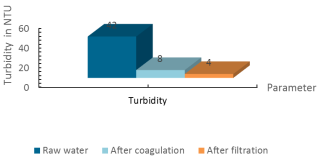
Figure 4 illustrates the concentrations of turbidity before and after treatment, highlighting the effectiveness of the process in reducing water turbidity.
Figure 4. Turbidity concentrations before and after treatment.
The graph shows a significant reduction in turbidity after treatment, highlighting the efficiency of the process. The turbidity initial was 42 NTU. After coagulation-sedimentation, the turbidity decreased to 8 NTU. Following filtration, the turbidity was further reduced to 4NTU, indicating a significant improvement in water clarity through the combined treatment process.
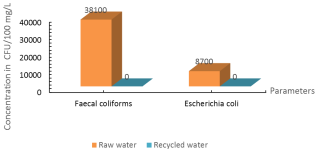
Figure 5 illustrates the concentrations of microbiological parameters after and before treatment.
Figure 5. Concentrations of microbiological parameters before and after treatment.
The graph shows a significant reduction of microbiological parameters after treatment, highlighting the efficiency of the process. The raw water contained Escherichia coli at 38100 CFU/100 mg/L faecal coliforms at 8700 CFU/100 mg/L. Post-treatment, both parameters were reduced to non-detectable levels (0 CFU/100 mg/L), demonstrating complete elimination these bacteria and the effectiveness of disinfection process.
After presenting the concentrations of the parameters before and after treatment, it is essential to assess the efficiency of the treatment process in terms of reduction rates. These rates quantify the reduction of pollutants and allow for a comparison of the performance of different treatment stages.
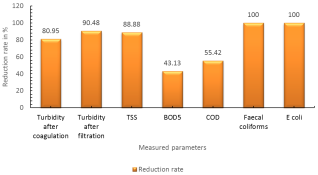
Figure 6 presents the removal rates for the different parameters measured
Figure 6. Reduction rate for the different parameters measured.
The graph shows that tertiary treatment is very effective in eliminating microbiological contaminants (100% for fecal coliforms and Escherichia coli) and significantly reduces turbidity (up to 90,48%) as well as suspended solids (88,88%). However, the removal of organic pollutants is less efficient, with reduction rates of 43,13% for BOD5 and 55,42% for COD, suggesting the adjustments to the tertiary treatment to further improve water quality and ensure better pollutant removal.
3.4. Perception of Wastewater Reuse by the Population
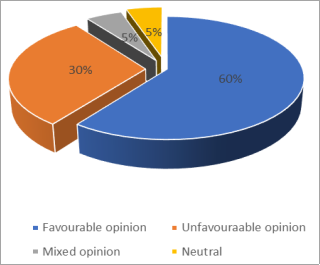
To assess the population's opinion on the acceptance of recycled water, a questionnaire was administered to a random sample of 100 people in the Camp SIC sub-blocks. Figure 7 shows the results of this survey.
Figure 7. Acceptance of recycled water by the population.

Analysis of the results shows that of the 100 people questioned, 60% were in favour of accepting recycled water, while 30% were against and the remainder were neutral or had a mixed opinion. This indicates a growing openness on the part of the population to the reuse of wastewater.
4. Discussion
Analysis of the water from the WWTP's secondary treatment shows that this treatment is effective in reducing concentrations of elements such as pH, SS, turbidity, phosphorus and total nitrogen, iron and COD, in compliance with Cameroonian discharge standards, with the exception of BOD5, which remains slightly above the threshold. These results thus corroborate with the work of , which shows that secondary treatments are generally effective in removing certain micropollutants. Microbiological analysis also revealed very high concentrations of faecal coliforms (38,100 CFU) and Escherichia coli (8,700 CFU), well in excess of current standards. The lack of disinfection in the existing system is the main cause. As point out, the absence of disinfection can lead to high levels of microbiological contaminants, underlining the need to incorporate a disinfection stage to guarantee health safety.
A comparison with reuse standards also reveals significant discrepancies, justifying the introduction of tertiary treatment. Analysis of the recycled water from the tertiary treatment pilot prototype shows encouraging results. However, certain parameters still pose potential risks that require detailed mitigation measures. The pH being slightly outside the recommended range (5.47 compared with 6-9) is a primary critical point. Acidic water contains more hydrogen ions (H+), which can increase its corrosiveness, leading to wear and tear on pipes and sanitary equipment. It can also cause skin and mucous membrane irritation upon direct contact. However, in the context of this study, the treated water is intended for non-potable use, specifically for toilet flushing, which limits health risks for users. Nevertheless, to prevent infrastructure corrosion, the additional of alkalizing agents such as lime or sodium hydroxide could be considered to stabilized the pH within a more neutral range. In this respect, research has shown that pH control is essential in water treatment as it can promote complexation reactions . The turbidity after filtration (4 NTU) complies with the Canadian standard of 5 NTU, even though it is above the threshold set by the USEPA (≤2 NTU), constitutes another problem. High turbidity indicates the presence of suspended solid, which can harbor pathogenic microorganisms. It also reduces the effectiveness of disinfectants such as chlorine, which binds to particles instead to acting on pathogens. Turbid water can thus lead to a resurgence of waterborne diseases. To remedy this, an additional step could be implemented to ensure more effective removal of suspended particles. The presence of residual chlorine at 0.73 mg/l is acceptable according to the standards, although it is below the USEPA standard of 1 mg/L. The most positive point was the total elimination of thermotolerant coliforms and Escherichia coli, demonstrating the excellent efficiency of the disinfection system, which is essential for guaranteeing the safety of recycled water. However, although this use limits direct health risks, some dangers persist. For example, resistant pathogenic microorganisms (viruses, protozoa, fungi) can remain in the water and cause infection upon accidental contact. To remedy this, it is necessary to optimize disinfection, reduce aerosols, and implanting a monitoring plan for the microbiological quality of the water, includes regular testing for a broad range of pathogens and antibiotic resistance markers. Furthermore, risk assessments should be conducted regularly to identify and address any emerging threats. These results underline the effectiveness of the proposed system, while highlighting areas for improvement, notably pH adjustment and turbidity, to achieve full compliance with reuse standards. Regular monitoring and adjustments to the system will be essential to ensure optimum water quality.
Analysis of the abatement rates shows that the treatment system is performing well overall. The significant reduction in turbidity from 80.95% after coagulation-decantation to 90.48% after filtration shows that these treatment stages are complementary and essential for improving water clarity. TSS, which can encourage the proliferation of micro-organisms in water, is also significantly reduced (88.88%) after tertiary treatment. The complete elimination of thermotolerant E. coli and coliforms is particularly encouraging, ensuring that the water meets the health standards required for its intended reuse. These observations are in line with recommendations, which emphasise that for any reuse project, the elimination of pathogenic agents is an essential criterion for the effectiveness of the treatment process.
The economic analysis reveals high investment (16 770 €) and a negative ROI, primarily due to high annual operating costs (129 580 €) and distribution infrastructure. These results align with those of , who also observed that wastewater reuse often involves higher costs compared to conventional water sources. However, some international experiences show that profitability is achievable with structured financing. In Ouagadougou in Burkina Faso, a wastewater reuse project received 71,1% financing from AFD, complemented by an 8,1% loan from the World Bank . This financial support allowed from the optimization of infrastructure and reduction of operating costs, improving the project’s viability. In Angola, a loan of $124,4 million financed sanitation works in four coastal cities, with additional funding of $ 49,4 million from the Africa Growing Together Fund (AGTF), supported by china . These examples show that external financing solutions, coupled with cost optimization strategies, can improve the viability of such projects. Although the project in question face high costs, flexile economic models and external investments could help make it viable in long term. Moreover, its environmental and socio economic benefits, as demonstrated by the encouraging results of our tertiary treatment prototype, add significant value beyond simple financial considerations consumption of 82,94 m3 per day (representing a saving of 10,37% of the Camp Sic total daily consumption), the creation of local jobs, and the reduction of water waterborne diseases. These benefits are comparable to those observed in similar project in Tunisia, which enabled a saving of water resources .
This study reveals a 60% acceptance rate for recycled water, reflecting growing openness to this solution. Similar trends were observed in South Africa, where a Johannesburg study reported an 85 % acceptance rate . In South Africa, wastewater reuse was particularly favored for specific uses, such as toilet flushing, where quality concerns were minimal. Education also played a key role, as better-informed populations were more likely to adopt innovative solutions like recycling. However, 30% of respondents expressed reluctance, driven by concerns about water quality, cost, and lack of trust in treatment technologies. For example, a water reuse project in Egypt failed in 1990 due to similar skepticism . To boost acceptance campaigns, demonstrations of treatment processes, and financial incentives like subsidies. Another obstacle identified is the lack of a clear legal framework for wastewater reuse in Cameroon. Without specific regulations, reuse projects may lack institutional support and fail to meet the quality standards required to guarantee health safety. However, some African countries have taken a major step forward in this area, following the example of Tunisia, which in the 1980s adopted a comprehensive regulatory framework on the reuse of treated wastewater, enabling significant development of irrigation with this water, which is beneficial for both agriculture and the environment . It is therefore crucial for Cameroon to draw up specific laws and standards based on best practice in other countries and international recommendations. The technical challenges involved in setting up a wastewater distribution network are also considerable. The need to use specific materials to prevent cross-contamination with the drinking water network was identified as a major challenge.
5. Conclusion
Faced with the growing challenges of sustainable water management, it is essential to optimise wastewater treatment systems so that it can be reused safely, particularly in rapidly expanding urban areas. Analysis of wastewater from secondary treatment at the Cité-Verte SIC camp WWTP in Yaoundé revealed the presence of certain contaminants requiring additional treatment before any reuse, justifying the installation of a tertiary treatment unit. Tests on a pilot prototype validated the effectiveness of the proposed treatment system, with an 80.95% reduction in turbidity after coagulation-decantation and 90.48% after sand filtration, and an 88.88% TSS removal rate. In addition, effective elimination of thermotolerant coliforms and Escherichia coli was achieved, with a free chlorine concentration of 0.73 mg/L to protect the recycled water from potential recontamination. Finally, while acceptance of the project by the majority of people surveyed is encouraging, regulatory and technical obstacles will have to be overcome if the project is to succeed.
Abbreviations

WWTP

Wastewater Treatment Plant

BOD5

Biological Oxygen Demand

COD

Chemical Oxygen Demand

MINEPDED

Ministry of Environment, Protection of Nature and Sustainable Development

USEPA

U.S. Environmental Protection Agency

Author Contributions
Monde Mbouombouo Aïcha Clarisse: Conceptualization, Methodology, Project administration, Resources, Writing – original draft
Aguiza Abai Emmanuel: Conceptualization, Methodology, Project administration, Resources, Writing – original draft, Writing – review and editing
Dobe Narcisse: Formal Analysis, Investigation, Resource, Visualization
Agbor Yanick Eta: Data curation, Project administration, Software, Visualization
Ombolo Auguste: Data curation, Validation, Visualization, Writing – original draft, Writing -review and editing
Conflicts of Interest
The authors declare no conflicts of interest.
References
[1] Butuena, B. A. N., Samba, L. C., Katende, K. P., Lokango, O. O., Mbanji, K. J., & Tshefu, L. L. (2024). Methods of access to water and socio-economic conditions of households, the case of the commune of Lemba. Revue Internationale De La Recherche Scientifique (Revue-IRS), 2(1), 101–116.
[2] Yonkeu, S., & Bitie, F. (2023). The determinants of access to drinking water in rural areas in Burkina Faso: Case of the rural commune of SAABA. International Journal of Innovation and Applied Studies, 40(3), 882-905.
[3] Jérôme, Y., Emmanuel, E., Saffache, P. (2021). Global water governance and water rights through the prism of Canaan, a slum apart in Haitip, Aqua-LAC, Vol. 13(1), p. 34-44.
[4] OCDE. (2021). La gouvernance de l'eau dans les villes africaines. Etudes de l'OCDE sur l'eau, 120p.
[5] Totouom, A. (2024). Difference in improved water source adoption between urban and rural households in Cameroon. Canadian Journal of Regional Science, 47(1), 36-44.
[6] Dhin Etia, F. C., Mvogo, G., & Honoré, B. (2022). Determinants of access to drinking water in Cameroon. African Development Review, 34(1), 154-170.
[7] National Institute of Statistics & ICF. (2020). Cameroon Demographic and Health Survey 2018. Yaoundé, Cameroun et Rockville, Maryland, USA: NIS et ICF.
[8] Mbang, M., Ngnikam, E., Efon, B., Meukam, P., & Fokou, S. (2021). Plot-based sanitation and quantification of faecal sludge in Yaoundé, Cameroon. Environnement, Ingénierie & Développement, 85, pp. 3-11.
[9] Letah, Nzouebet, W. A., Soh Kengne, E., Djumyom Wafo, G. V., Nguenang Njiojo, A. J., Hoser, C., Nbendah, P., Rechenburg, A., Kengne Noumsi, I. M. (2019). Application of multivariate statistical methods for the assessment of the variability of on-site sanitation faecal sludge in Cameroon. International. Journal. Biological. Chemical. Sciences, 13(5), 133-151,
[10] Feudjeu, D. (2012). Health and environmental risks associated with wastewater discharge in the Ngoa-Ekellé district of Yaoundé, Cameroon. Dissertation, Yaoundé School of Nursing, Medical and Health Engineering Technicians, Yaoundé.
[11] Aboui, E. M. S. M., & Akamba, G. Y. (2023). Housing insecurity and health problems in the context of flooding in the Étam-Bafia neighbourhood, Yaoundé. Eur. Sci. J. ESJ, 19, 73.
[12] Nguema, P. F., Efon, B., Defo, C., Mounir, Z. M., & Oum, E. K. (2021). Impacts of hygiene and sanitation practices on surface and groundwater in the city of Yaoundé, Cameroon. Afrique Science, 19(2), 68-80.
[13] Nkeng, G., Badjika, G., & Ajeagah, G. (2023). Ecotoxicological characterisation and eco-engineering of sludge at the Cité-Verte domestic wastewater treatment plant in Yaoundé. Universal Journal of Life and Environmental Sciences, 5(1), 20-28.
[14] Kakundika, J. M., Musibono, D. E., Saila, Y. I., & Tangou, T. T. (2019). Environmental factors degrading of the urban waters courses: Case of the river N’djili in Kinshasa (DRC). International Journal of Innovation and Applied Studies, 27(3), 818-830.
[15] Saifi, H., Saifi, R., Benabdelkader, M., Saidi, M., & Mabrouk, Y. (2018). Impact of wastewater treatment plants on the environment. Revue des Energies Renouvelables SIENR, 18, 87-91.
[16] Eme, C. et Boutin, C. (2015). Composition of domestic wastewater by emission source at household level. Onema publication, Journal of Water Resource and Protection, 16(1), 90.
[17] Chimi, A. N., Lekeufack, M., Fotsa, J. M., Fowoung, D., Tanetsa, A. E. M., Edzigui, M. L. T. & Fonkou, T. (2023). Reuse of domestic wastewater in urban agriculture through hydroponic cultivation of lettuce (Lactuca sativa L). Cameroon Journal of Experimental Biology, 17(2), 40-46.:
[18] Mouhanni, H., Hamdi, H., Bendou, A., Benzine, L., & Cavalli, E. (2012). Impact of the reuse of treated wastewater in irrigation: an analysis of ionic lixiviats. Revue des Sciences de l’Eau, 25(1), 69-73.
[19] Squinazi, F., & Roche, N. (2024). Summary: Reusing water in buildings: what are the indications? Which management methods? Environnement, Risques & Santé, 9(1), 35.
[20] Rodier, J., Legube, B., Merlet, N. (2009). Water analysis. 9th edition. Ed. Dunod, Paris, 1526p.
[21] ISO 5667/3. (1994). Water quality - sampling - sample storage and handling guide.
[22] WHO (2011). Guidelines to Drinking-water Quality (fourth edition). (NLM classification: WA 675). p. 564.
[23] AFNOR (French Association for Standardisation), (2001). Water quality, Major elements - other elements and mineral compounds. Aubenas Ardèche, AFNOR, 635 p.
[24] Choubert, J., Cretolier, C., Tahar, Budzinski, H., Esperanza, M., Dherret, L., Noyon, N. (2015). What micropollutants can be eliminated by extensive domestic wastewater treatment processes? Techniques Sciences Méthodes, 3, 79-94.
[25] Metcalf, & Eddy. (2012). Wastewater Engineering treatment and Reuse (éd. 4). (McGraw-Hill, Éd.) New-york: ISBN 0070495394/ 9780070495395.
[26] Morin-crini, N., & Crini, G. (2017). Contaminated industrial water Reglementation, chemical and biological parameters & innovative purification processes. (P. u. Franche-comté, Éd.) Besançon, 512p.
[27] WHO (1989). Use of wastewater in agriculture and aquaculture: health recommendations. Report of a WHO Scientific Panel, World Health Organization, Technical Report Series 778, (p. 82). Geneva.
[28] Charland, K. (2014). Analysis of the prospects for the reuse of municipal wastewater in Quebec. Master’s thesis in environment, University of Sherbrooke, Quebec, 78p.
[29] AFD (2011). Reuse of treated wastewater operational perspectives and recommendations for action. Final rapport.91p.
[30] Investir Time (2023). Wastewater recycling: the opportunities of Africa’s new “black gold”. Retrieved from
[31] Lament, E. P, Mutanga, S. S. Trymore, G., Sikhwivhilu, K.,& Chikozho, C. (2024). The influence of public perception on the acceptance of potable water recovery projects. The case of Diepsloot township, Johannesburg. Réutilisation de l’eau, 14(1), 30-38. Https://doi.org10.2166/wrd.2024.108
[32] UNESCO (2017). Wastewater: The new black gold? World Water Development Report 2017-water. Retrieved from
[33] Benzaria, M. (2008). Methodological approach for wastewater reuse projects in irrigation (Doctoral dissertation, University of Quebec in Montreal).
[34] Elloumi, M. (2016). Groundwater governance in Tunisia. IWMI Project Report, Groundwater governance in the Arab World, USAID. IWM.
Cite This Article
  • APA Style

    Clarisse, M. M. A., Aguiza Abai Emmanuel, Dobe Narcisse, Agbor Yanick Eta, Ombolo Auguste. (2025). Treatment and Reuse of Domestic Wastewater: The Case of Water from the Camp SIC of Cité Verte Wastewater Treatment Plant (Yaounde-Cameroon). International Journal of Sustainable Development Research, 11(2), 105-114. https://doi.org/10.11648/j.ijsdr.20251102.15

    Copy | Download

    ACS Style

    Clarisse, M. M. A.; Aguiza Abai Emmanuel; Dobe Narcisse; Agbor Yanick Eta; Ombolo Auguste. Treatment and Reuse of Domestic Wastewater: The Case of Water from the Camp SIC of Cité Verte Wastewater Treatment Plant (Yaounde-Cameroon). Int. J. Sustain. Dev. Res. 2025, 11(2), 105-114. doi: 10.11648/j.ijsdr.20251102.15

    Copy | Download

    AMA Style

    Clarisse MMA, Aguiza Abai Emmanuel, Dobe Narcisse, Agbor Yanick Eta, Ombolo Auguste. Treatment and Reuse of Domestic Wastewater: The Case of Water from the Camp SIC of Cité Verte Wastewater Treatment Plant (Yaounde-Cameroon). Int J Sustain Dev Res. 2025;11(2):105-114. doi: 10.11648/j.ijsdr.20251102.15

    Copy | Download

  • @article{10.11648/j.ijsdr.20251102.15,
      author = {Monde Mbouombouo Aïcha Clarisse and Aguiza Abai Emmanuel and Dobe Narcisse and Agbor Yanick Eta and Ombolo Auguste},
      title = {Treatment and Reuse of Domestic Wastewater: The Case of Water from the Camp SIC of Cité Verte Wastewater Treatment Plant (Yaounde-Cameroon)
    },
      journal = {International Journal of Sustainable Development Research},
      volume = {11},
      number = {2},
      pages = {105-114},
      doi = {10.11648/j.ijsdr.20251102.15},
      url = {https://doi.org/10.11648/j.ijsdr.20251102.15},
      eprint = {https://article.sciencepublishinggroup.com/pdf/10.11648.j.ijsdr.20251102.15},
      abstract = {The crisis of access to water is becoming increasingly worrying, requiring the exploration of sustainable solutions. In this context, recycling and reuse of treated wastewater are emerging as promising alternatives. The aim of this study is to implement a tertiary treatment system at the Camp SIC Cité-Verte wastewater treatment plant in Yaoundé, Cameroon, to improve the quality of the treated wastewater so that it can be safely reused to flush toilets. The methodological approach adopted includes sampling treated wastewater followed by laboratory analysis, then the design and implementation of a tertiary treatment system. A survey is then carried out among a sample of the local population to gather their opinions on the project. Analyses of the treated wastewater revealed the presence of certain contaminants requiring additional treatment. Tests on a pilot prototype validated the system's effectiveness, with a turbidity reduction rate of 80.95% after coagulation-decantation and 90.48% after sand filtration, followed by an 88.88% reduction in suspended solids. In addition, total elimination of bacterial loads was achieved with a free chlorine level of 0.73 mg/L to prevent occasional contamination. This study highlights the project's significant potential to contribute to sustainable water management.
    },
     year = {2025}
    }
    

    Copy | Download

  • TY  - JOUR
    T1  - Treatment and Reuse of Domestic Wastewater: The Case of Water from the Camp SIC of Cité Verte Wastewater Treatment Plant (Yaounde-Cameroon)
    
    AU  - Monde Mbouombouo Aïcha Clarisse
    AU  - Aguiza Abai Emmanuel
    AU  - Dobe Narcisse
    AU  - Agbor Yanick Eta
    AU  - Ombolo Auguste
    Y1  - 2025/05/09
    PY  - 2025
    N1  - https://doi.org/10.11648/j.ijsdr.20251102.15
    DO  - 10.11648/j.ijsdr.20251102.15
    T2  - International Journal of Sustainable Development Research
    JF  - International Journal of Sustainable Development Research
    JO  - International Journal of Sustainable Development Research
    SP  - 105
    EP  - 114
    PB  - Science Publishing Group
    SN  - 2575-1832
    UR  - https://doi.org/10.11648/j.ijsdr.20251102.15
    AB  - The crisis of access to water is becoming increasingly worrying, requiring the exploration of sustainable solutions. In this context, recycling and reuse of treated wastewater are emerging as promising alternatives. The aim of this study is to implement a tertiary treatment system at the Camp SIC Cité-Verte wastewater treatment plant in Yaoundé, Cameroon, to improve the quality of the treated wastewater so that it can be safely reused to flush toilets. The methodological approach adopted includes sampling treated wastewater followed by laboratory analysis, then the design and implementation of a tertiary treatment system. A survey is then carried out among a sample of the local population to gather their opinions on the project. Analyses of the treated wastewater revealed the presence of certain contaminants requiring additional treatment. Tests on a pilot prototype validated the system's effectiveness, with a turbidity reduction rate of 80.95% after coagulation-decantation and 90.48% after sand filtration, followed by an 88.88% reduction in suspended solids. In addition, total elimination of bacterial loads was achieved with a free chlorine level of 0.73 mg/L to prevent occasional contamination. This study highlights the project's significant potential to contribute to sustainable water management.
    
    VL  - 11
    IS  - 2
    ER  - 

    Copy | Download

Author Information
  • Abstract
  • Keywords
  • Document Sections

    1. 1. Introduction
    2. 2. Materials and Methods
    3. 3. Results
    4. 4. Discussion
    5. 5. Conclusion
    Show Full Outline
  • Abbreviations
  • Author Contributions
  • Conflicts of Interest
  • References
  • Cite This Article
  • Author Information